Sun Prints
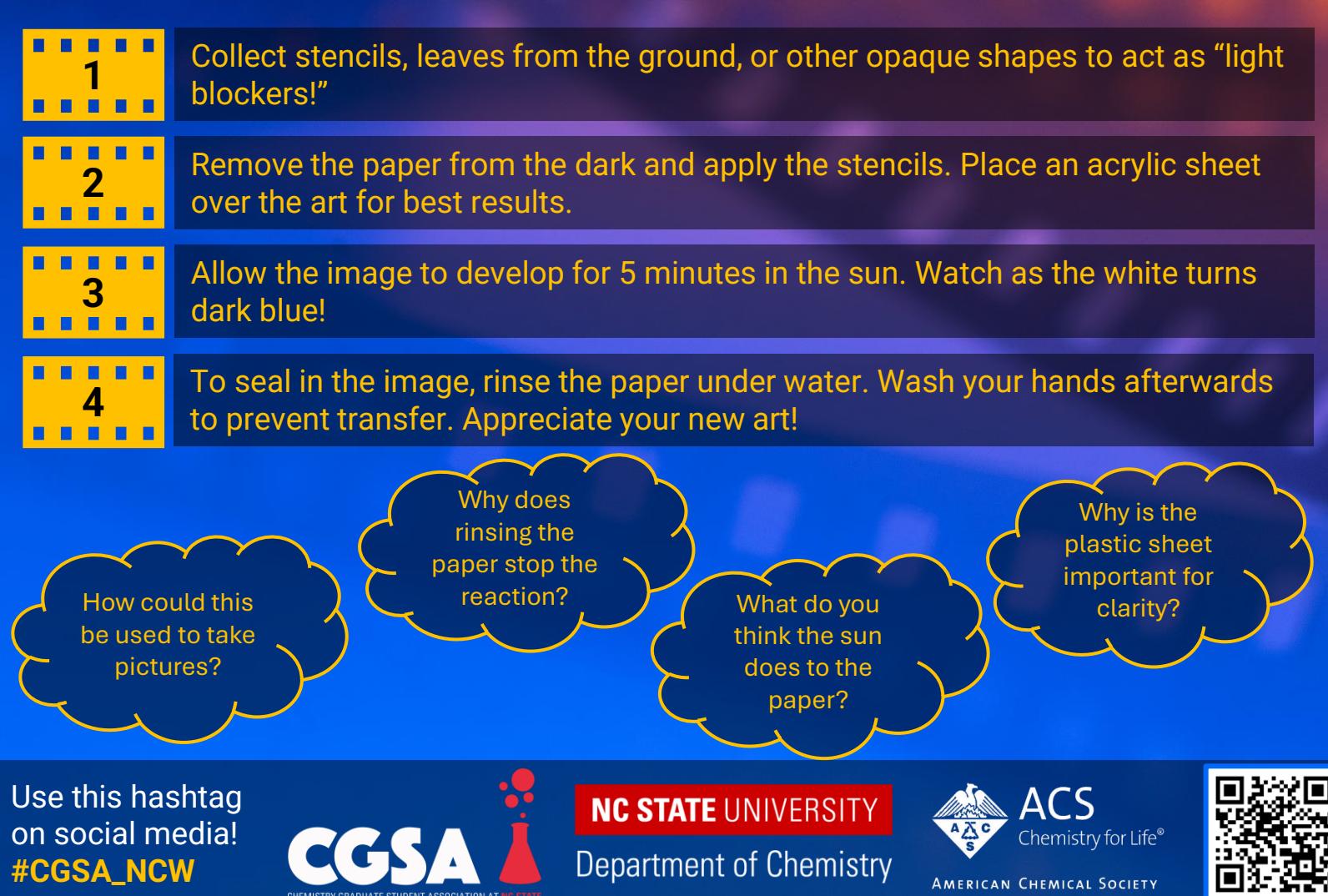
Light plays an important part in our ability to see the world around us but can also start chemical reactions! Before digital cameras, analog cameras used light sensitive compounds inside of film to create “negatives,” processed in dark rooms to avoid more exposure. Some of the first photographs created were formed using a “cyanotype,” also known as a blueprint. UV light is a part of light from the sun with an extra amount of energy. When the chemical inside of the paper touches UV light, it breaks down and the resulting chemical turns dark blue. With just a rinse of water, the image is created! What can you create using stencils or leaves before the paper turns completely blue?
WARNINGS & SAFETY
The photosensitive chemical on the paper is not safe to ingest. Wash your hands after touching the paper!
The Cyanotype process, also known as blueprints, is a non-silver, non-gelatin process that was introduced by Sir John Herschel in 1842. Herschel’s process came out a few years after the introduction of Louis Jacques Mandé Daguerre’s Daguerreotype process of 1839.
Early field biologists such as Anna Atkins used Herschel’s process for indexing and documenting plant specimens. The Cyanotype process didn’t become popular until the 1880’s and this can be attributed to two technological advancements: the gelatin dry plate glass
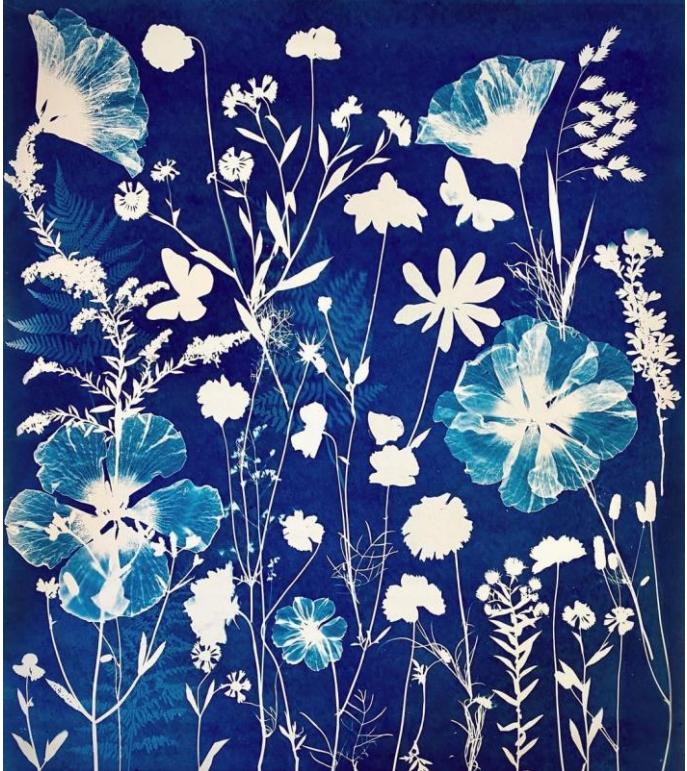
negative first offered for sale in 1879 and George Eastman’s introduction of flexible film that came on a roll, a Kodak camera first introduced in 1888 which came loaded with 100 exposures, the ease of having film developed by Kodak and great marketing that led to the rise in affordable photography for the masses.
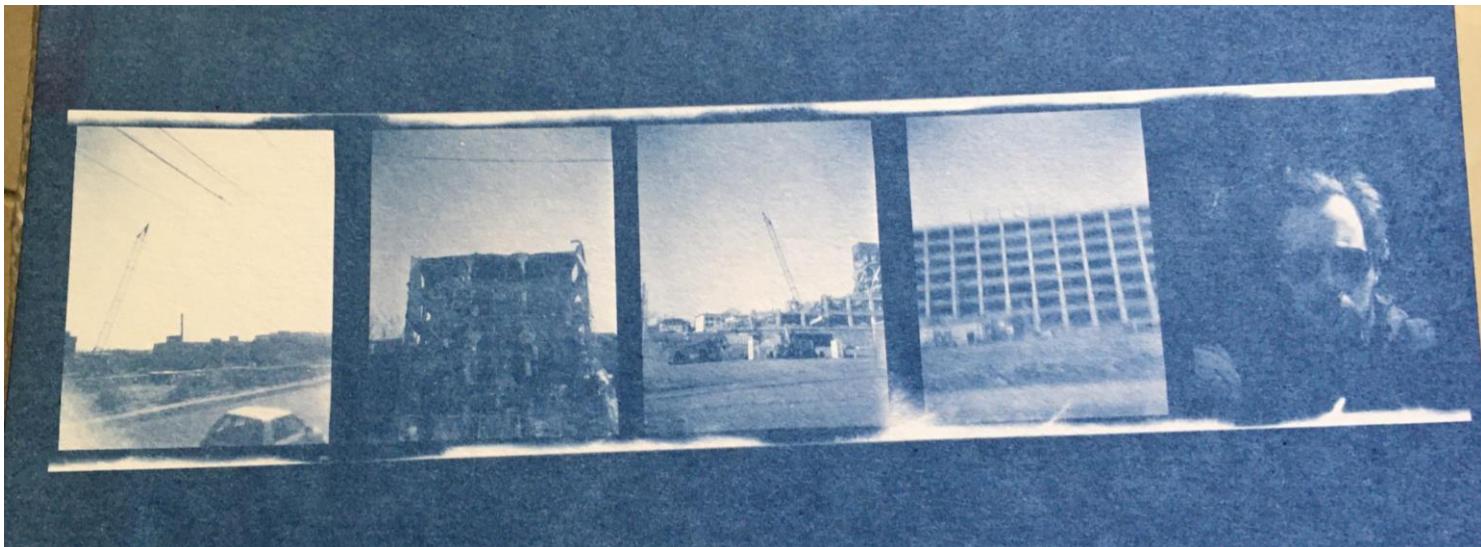
Examples of Cyanotype contact prints from roll film can be found as standalone prints as well as being mounted in photo albums or scrapbooks. Photographers using gelatin dry plate negatives also made use of having the capability to contact print from a camera negative and more. The process was also used to copy drawings from original tracings, think architectural blueprints.